
Investor wealth slumped by a whopping Rs 5.3 lakh crore on Friday as the benchmark BSE Sensex crashed more than 1,900 points to post its biggest single-day fall in nearly ten months. At the close of trade, the total market capitalisation of BSE-listed companies eroded by Rs 5,37,375.94 crore to Rs 2,00,81,095.73 crore. The total market capitalisation of these companies stood at Rs 2,06,18,471.67 crore on February 25.

Investors' wealth has eroded by over Rs 680,441 crore in three days of market fall amid weak global trends and muted domestic sentiments. Extending its losses for the third straight day, BSE benchmark Sensex on Thursday finished below the 60,000-level, weighed by hectic selling in IT, energy and finance stocks amid a sell-off in European equities. The index has lost 1,844.29 points in three sessions.

Inflation data and global trends would be the major driving factors for the equity markets this week which after a record-breaking run took a breather in recent trades, analysts said. The overall market sentiment remains positive, supported by improving economic data and earnings but higher valuations can trigger bouts of profit booking, they said further. During the last week, which the 30-share BSE benchmark rose by 175.12 points or 0.30 per cent.

Investors' wealth eroded by Rs 7.59 lakh crore on Monday as the equity market took a heavy drubbing amid escalating tensions in the Middle East. The 30-share BSE Sensex plunged 825.74 points or 1.26 per cent to settle at 64,571.88 points. During the day, the index plummeted 894.94 points or 1.36 per cent to 64,502.68 points.

Announcement of macroeconmic data such as industrial production and inflation, the US Federal Reserve's interest rate decision along with trends in global equities would dictate movement in the stock market this week, analysts said. Besides, foreign fund trading activity would also guide the trends in equities. "All eyes are now on the US Fed policy outcome for cues, which is scheduled on June 14. In the following sessions, the European Central Bank (ECB) and Bank of Japan (BoJ) will also announce their policy decisions.

Domestic equities will be mainly driven by global market trends, foreign institutional investors' movement and developments around new Covid variant Omicron this week, according to analysts. Markets traded under pressure last week following weak global cues and overall investor sentiment remained downbeat throughout the week, they observed. "Global markets, Omicron variant, dollar index and FIIs' behaviour will be key factors to drive the market this week," said Santosh Meena, head of research, Swastika Investmart Ltd. One major event last week was US Federal Reserve's announcement that it will end bond-buying from March, and it also signalled starting rate hike cycle thereafter.

The inflation data for May and the US Fed interest rate decision are the crucial factors that would dictate terms in the equity market this week, analysts said. Moreover, foreign fund trading activity, movement of rupee and crude oil prices would be the other key monitarables for the markets, they added. "All eyes will be on the US FOMC (Federal Open Market Committee) decision scheduled on June 15, and the market is fearing aggressive rate hikes amid inflation monster. "Bank of Japan will also announce its credit policy on June 17.

Investors' wealth tumbled over Rs 2.58 lakh crore on Monday as equity markets suffered a heavy sell-off, with the Sensex plunging 2 per cent. The BSE benchmark tanked 1,172.19 points or 2.01 per cent to settle at 57,166.74 after a weak opening. During the day, it plummeted 1,496.54 points or 2.56 per cent to 56,842.39. Tracking the weak trend in equities, the market capitalisation of BSE-listed firms tumbled by Rs 2,58,855.59 crore to stand at Rs 2,69,44,207.98 crore.

The stock market is likely to continue with its positive momentum but may face bouts of profit-booking amid lofty valuations in this holiday-shortened week, analysts said. The trading sentiment will be guided mostly by global trends in absence of major domestic events, they said. Markets would remain closed on Friday for 'Ganesh Chaturthi'.

Equity investors became richer by over Rs 7.21 lakh crore as stock markets continued the rally for the second day on Wednesday. The 30-share BSE Sensex opened in the green on Wednesday and further jumped 1,469.64 points or 2.75 per cent to 54,893.73 during the day. It finally settled at 54,647.33, higher by 1,223.24 points or 2.29 per cent amid reports of diplomatic efforts to end Russia's attack on Ukraine. On Tuesday, it settled at 53,424.09, higher by 581.34 points or 1.10 per cent.

The market capitalisation of BSE-listed companies jumped to a record high of Rs 2,40,04,664.28 crore on Tuesday, driven by a rally in stocks that also saw the benchmark Sensex touching its lifetime peak of 53,887.98 points. Rallying for the second consecutive day on Tuesday, the 30-share BSE index closed at a fresh closing peak of 53,823.36 points, a jump of 872.73 points or 1.65 per cent. During the day, it zoomed 937.35 points to 53,887.98 points.

The domestic stock market may face volatility amid the monthly derivatives expiry scheduled this week, while investors would mainly await the outcome of RBI's interest rate decision on Friday, said analysts. Global market movement would also continue to drive sentiment amid a bearish trend recently following rate hikes by the US Federal Reserve and other central banks. The Reserve Bank of India (RBI) may take cues from its global counterparts to raise interest rate for the fourth time in a row to control inflation.

Equity investors have become poorer by more than Rs 18.74 lakh crore as the market continued to remain bearish for the fifth session on the trot on Thursday. The 30-share BSE Sensex tumbled 1,158.08 points or 2.14 per cent to end below the 53,000-level at 52,930.31 points on Thursday. Markets have been falling for five straight sessions and the BSE benchmark has tumbled 2,771.92 points or 4.97 per cent during this period.

Ambani and Adani account for a fifth of the net worth of all billionaire promoters in the country and half the combined net worth of the top 10.

Investors' wealth has swelled by over Rs 13.16 lakh crore as benchmark indices continued their northward march for the fifth session on the trot on Monday. The 30-share BSE Sensex jumped 935.72 points or 1.68 per cent to settle at 56,486.02 on Monday. In the past five trading sessions, the benchmark has zoomed 3,643.27 points or 6.89 per cent. Propelled by the optimism in equities, the market capitalisation of BSE-listed firms jumped by Rs 13,16,944.74 crore in five trading sessions to Rs 2,54,27,775.78 crore.

Investors' wealth on Tuesday jumped by over Rs 2.51 lakh crore, in tandem with a sharp recovery in equities after four days of heavy declines. The 30-share BSE Sensex opened on a weak note and tumbled 581.93 points or 1.10 per cent to 52,260.82 during the day amid firming oil prices and relentless selling by foreign institutional investors. Amid bouts of volatility, the benchmark touched a high of 53,484.26 and a low of 52,260.82 during the trade. It finally settled at 53,424.09, higher by 581.34 points or 1.10 per cent.

Investor wealth worth over Rs 13.44 lakh crore was wiped off on Thursday as the domestic equity markets tumbled along with global risk assets, after Russia launched military operations against Ukraine. Amid intensifying rout in the global financial markets, the 30-share BSE Sensex plummeted 2,702.15 points or 4.72 per cent to end at 54,529.91. The carnage on Dalal Street eroded investor wealth worth Rs 13,44,488.54 crore, taking the total market capitalisation (m-cap) to Rs 2,42,24,179.79 crore on the BSE.

The RBI's policy decision would be the major event driving trading sentiment in the equity market this week, while global cues, foreign funds movement and crude oil prices will be the other key factors to watch out for, analysts said. Markets have been witnessing a rebound recently. However, the move lacks decisiveness amid lingering challenges like global policy tightening due to soaring inflation and geopolitical tensions, they added. "RBI policy, global macro numbers and crude oil prices will set the trend for this week.

Stock markets are expected to remain under pressure this week due to the overhang of US presidential polls and uncertainty over global growth due to resurging cases of coronavirus, according to analysts.

Investors became poorer by over Rs 4.47 lakh crore on Friday as markets faced severe drubbing, mirroring weak trends in global equities. The 30-share BSE benchmark dived 866.65 points or 1.56 per cent to settle at 54,835.58. During the day, it tumbled 1,115.48 points or 2 per cent to 54,586.75.

From the pandemic shocks to state polls to global trends, a raft of sentiment drivers are expected to steer the Indian stock market in 2022 after a historic year of massive investor returns and milestones. The Union Budget, which will be closely watched for further reform moves, and quarterly earnings of corporates will be among the developments on investors' radar amid global central banks moving towards tighter interest regime in the wake of inflationary pressures. The year 2021 was rewarding in a big way for equity investors.

Reliance Industries Ltd was the biggest wealth creator during the five-year period from 2018 to 2023 while Adani Enterprises Ltd was the top all-round wealth creator, according to a study by Motilal Oswal Financial Services. The study, based on stock market performance of companies, said for the fifth time in succession, Reliance emerged as the largest wealth creator, adding Rs 9,63,800 crore wealth over 2018-23. It was followed by Tata Consultancy Services (Rs 6,77,400 crore wealth addition), ICICI Bank (Rs 4,15,500 crore), Infosys (Rs 3,61,800 crore) and Bharti Airtel (Rs 2,80,800 crore).

At a time when exchange-traded funds (ETFs) were unloading Jio Financial Services from their portfolios, some active fund managers were placing large bets on the demerged financial services arm of Reliance Industries Ltd (RIL), a report by Nuvama Alternative & Quantitative Research shows. Motilal Oswal Mutual Fund and Quant Mutual Fund were the top MF buyers of the stock in August. They bought around 60 million shares each, together investing around Rs 2,800 crore.

Equity benchmark index Sensex buckled under selling pressure for the second straight session to close below the 65k mark on Friday, as investors offloaded IT, teck and metal stocks amid a bearish global trend. Besides, fresh foreign fund outflows also hit investor sentiments, traders said. In a volatile trade, the 30-share BSE Sensex declined 202.36 points or 0.31 per cent to settle at 64,948.66.

Investors' wealth eroded by a massive Rs 8,21,666.77 crore on Monday as the market saw a massive sell-off not seen in many months. The BSE benchmark Sensex plunged 1,170.12 points or 1.96 per cent to close at 58,465.89. This is the worst single-day drop for the gauge in over seven months. This was also the fourth straight session of decline for the Sensex.

After cement, billionaire Gautam Adani's group and Kumar Mangalam Birla's Aditya Birla Group are set for a face-off in the wires and cable business with both conglomerates announcing forays into the high double-digit growth sector.

The Fed interest rate decision, domestic macroeconomic data announcements and quarterly earnings will be the major sentiment drivers for the equity market in a holiday-shortened week ahead, analysts said. Investors will also take cues from the monthly auto sales numbers to be announced on Monday. Equity markets will remain closed on Thursday for Diwali Laxmi Pujan and on Friday for Diwali Balipratipada.

The Russia-Ukraine conflict, which has spooked financial markets globally, will set the tone for Dalal Street this week amid concerns over energy prices and foreign fund outflows, analysts said. Participants will also track key macroeconomic signals like GDP estimates and PMI data for manufacturing and services sectors to be announced this week, they added. "With earnings season behind us and given the overall sentiments, markets are expected to move in sync with global peers in the coming week. "A close eye will be kept on the developments concerning the Russia - Ukraine crisis and considering the inflation overhang, market participants will also observe movements in energy prices," said Shrikant Chouhan, Head of Equity Research (Retail), Kotak Securities Ltd.

Tata Steel was the biggest gainer in the Sensex chart, rising 2.39 per cent, followed by Tata Motors, Power Grid, Reliance Industries, UltraTech Cement, NTPC, Nestle, HUL, Mahindra & Mahindra, Wipro, Kotak Mahindra Bank and Asian Paints. In contrast, Bajaj Finance, IndusInd Bank, Axis Bank, Bharti Airtel, Bajaj Finserv, ICICI Bank, Infosys and Titan were among the laggards.

Benchmark equity indices Sensex and Nifty closed higher on Friday after two days of fall, helped by buying in metal, telecom and auto stocks amid a firm trend in global markets. Automakers led by Maruti Suzuki India, Hyundai, Mahindra & Mahindra reporting robust wholesales of passenger vehicles and GST collections crossing Rs 1.50 lakh crore for the third straight month in May also added to the optimism. The 30-share BSE Sensex climbed 118.57 points or 0.19 per cent to settle at 62,547.11.

Macroeconomic data announcement, Omicron situation and global trends will be the major driving factors for the equity market in the first week of the new year 2022, according to analysts. In what turned out to be a historic year, the Indian stock indices went past multiple milestones and the 30-share Sensex made an annual gain of 10,502.49 points or 21.99 per cent in 2021. Religare Broking Vice-President (Research) Ajit Mishra said, "This week marks the beginning of a new month and participants will be closely eyeing some crucial high-frequency data like monthly auto sales, India manufacturing PMI and India services PMI. "Besides, updates on the COVID-19 situation and performance of global markets will also be critical."
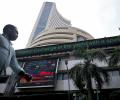
RBI policy, macro data, company earnings to decide market course this week: Experts

Indian equity markets are likely to witness volatility this week due to concerns over rising cases of coronavirus and expiry of derivatives contracts, analysts said. Further, progress surrounding the COVID-19 vaccine, related updates, US stimulus talks and global cues would dictate the market trend, traders said. "Going ahead, the market is likely to be volatile as sentiments oscillate between fear of rising COVID cases globally and optimism over vaccine progress. Investors would closely watch out development over the US stimulus talks," said Siddhartha Khemka, Head - Retail Research, Motilal Oswal Financial Services Ltd.

Equity markets will look for directions from global trends, ongoing quarterly earnings and investment patterns of foreign institutional investors (FIIs) in a holiday-shortened week ahead and may encounter volatility amid the scheduled monthly derivatives expiry, according to analysts. Equity markets will remain closed on Wednesday on account of 'Republic Day'. "This week is a holiday-shortened one and it's going to be critical due to the list of events and data that are lined up.

Shares of Zomato on Friday zoomed nearly 53 per cent in its debut trade against its issue price of Rs 76. The stock made its debut at Rs 115, reflecting a huge gain of 51.31 per cent against the issue price on the BSE. It then hit a high of Rs 138, a jump of 81.57 per cent.

Investors' wealth tumbled by over Rs 7.35 lakh crore on Friday, with the BSE benchmark Sensex plummeting 1,688 points amid a global selloff triggered by a new coronavirus variant. The 30-share index tumbled 1,687.94 points or 2.87 per cent to close at 57,107.15. During the day, it tanked 1,801.2 points or 3.06 per cent. Tracking the weak trend, the market capitalisation of BSE-listed companies slumped by Rs 7,35,781.63 crore to reach Rs 2,58,31,172.25 crore.

Making a stellar debut, shares of FSN E-Commerce Ventures, which runs the online marketplace for beauty and wellness products Nykaa, closed with a huge premium of over 96 per cent against the issue price of Rs 1,125 on Wednesday. The stock debuted at Rs 2,001 apiece, reflecting a jump of 77.86 per cent on the BSE. Then, the scrip zoomed 99.83 per cent to Rs 2,248.10 during the day before closing at Rs 2,206.70.

HDFC Bank's market capitalisation (market cap) touched Rs 13 trillion in Thursday's (December 28, 2023) intra-day trades as the largest private sector lender is set to report its sharpest monthly rally in the past two years. At 10:33 AM; HDFC Bank's market cap stood at Rs 13.03 trillion, the BSE data shows. The stock was up 1 per cent at Rs 1,717.90 in intra-day trades on December 29, inching towards its record high of Rs 1,757.80 touched on July 3, 2023.

The rupee depreciated by 9 paise and settled at its all-time low level of 83.13 against the US dollar on Wednesday, weighed down by a surge in crude oil prices and strong American currency. Forex traders said the Indian rupee depreciated as the US dollar rose to the highest levels in six months. Moreover, elevated crude oil prices also weighed on rupee.
Weakness in HDFC Bank's net interest margin (NIM) might have bottomed out in the July-September quarter (Q2-FY24), analysts said on Tuesday, as most of the merger-related one-time adjustments have been done. The bank, they believe, should be able to grow from here on, allowing the stock to reverse its underperformance. "The weak NIM print was not unexpected given the merger and regulatory impact caused by the incremental cash reserve ratio (ICRR; 5-10 bps for the quarter).
 © 2026 Rediff.com - Advertise with us - Disclaimer - Privacy Policy - Sitemap - Feedback - About us - Terms of use - Grievances